How to Decline Invitations After Your Husband Dies (And When to Say Yes)
Updated: 1 day ago

When your husband dies, even a simple invitation can feel complicated.
A friend invites you to dinner. Someone asks you to a party. A couple invites you to spend the holidays with their family.
Before your husband died, you might have accepted without giving it much thought. But now you're wondering whether you'll be the only woman there without a husband. Who will you talk to? Where will you sit? What if you start crying?
And perhaps the hardest question of all: Can you walk into a festive room alone?
After Eric died, I learned that some invitations were worth declining. Others led to some of the most wonderful experiences of my new life. The challenge was being open to learning the difference.
If you're wondering how to decline invitations after losing your husband, I want to help you find the words to say no when you need to. But I also want to encourage you to consider saying yes, because sometimes the invitation you're most afraid to accept turns out to be exactly what you need.
Is It Okay to Say No to Invitations When You're Grieving?
Absolutely. Grieving your husband doesn't mean you owe anyone your company, your time, or an explanation for how you're feeling.
But I learned something else after Eric died. Not every invitation was good for me, and not every person understood what I was going through.
I remember visiting friends who seemed determined to treat me as a newly single woman rather than a woman whose husband had died.
Someone would announce, "He's single too!"
Or I'd hear, "You need to go out on the town with this friend. She's single too. You are, after all, a single lady now."
One friend even told me she was jealous of me because I got to start my life over again with money.
I hadn't asked to start my life over. My husband had died.
And I wasn't suddenly a different person because Eric was gone. I was still the woman I had always been, only now I was trying to figure out how to live without him.
Eventually, I stopped putting myself in those situations with people I felt were unsafe for my grief. I didn't need people telling me to move on, asking whether I was still grieving, or pushing me toward a life they thought I should want.
I needed people who understood that I was grieving and allowed me to be right where I was.
The people who deserve your yes are the ones who acknowledge where you are, not the ones who insist you should be somewhere else.
How to Set Boundaries With People Who Don't Understand Your Grief
Setting boundaries after losing your spouse can feel especially difficult when the people involved are longtime friends, relatives, or members of your church.
You may love these people. You may have shared years of memories with them. But that doesn't mean every gathering is a good place for you right now.
I remember standing at church after a service, talking with a couple. During our conversation, they began discussing plans for another family they had invited over that afternoon, including who would handle the preparations.
No invitation was extended to me.
It was one of those moments that reminded me how much my place in the world had changed because our family no longer had a dad.
Later, when they invited us for Easter, I declined. The kids and I did something new instead.
I didn't have to make a big announcement or explain every feeling behind my decision. I simply decided that spending Easter differently was best for us.
Sometimes saying no isn't about withdrawing from life. It's about making room for a different experience.
That doesn't mean everyone who says something awkward or insensitive needs to be removed from your life. People who haven't experienced widowhood won't always understand it, and some will get things wrong even when they care deeply about you.
But there is a difference between someone who occasionally says the wrong thing and someone who repeatedly dismisses your grief or pressures you to become a person you're not ready to be—or a person you never want to be.
You are allowed to recognize that difference.
How to Politely Decline an Invitation When You're Grieving
One of the most practical things I learned about saying no while grieving was that I didn't need an elaborate excuse.
You don't have to invent another commitment or apologize for needing something different. Sometimes a simple, gracious response is enough.
When you're making different plans:
"I'm sorry we can't come this year. We're doing something else because that's best for us."
When you want someone to understand why you're declining:
"Please understand that I'm making a different choice because I'm grieving."
When you don't want to explain:
"Thank you for inviting me, but I can't this year."
When you appreciate the invitation but aren't ready:
"Thank you for thinking of me. I'm going to sit this one out, but please keep inviting me."
When someone continues pushing you:
"I appreciate your concern, but I've made my decision. I hope you'll respect it."
When you want to leave the door open:
"I can't make it this time, but I'd love to get together another day."
These responses work for holiday gatherings, birthday parties, dinners with friends, church events, and other social invitations.
You can be kind without agreeing to something that isn't right for you. And you can change your mind about what feels right as you move through your grief.
If saying no is something you're struggling with, I've also created a free Saying No Worksheet with reflection questions and practical ways to set boundaries.
When Should a Widow Say Yes to an Invitation?
Now I want to tell you about an invitation I almost didn't accept.
A couple of weeks after Eric died, a woman who lived on my block began texting me. We had never met, but she kept suggesting that we get together.
I ignored her messages. I was overwhelmed. My husband had just died, and the last thing I wanted was to meet someone new.
Finally, I agreed to go over to her house, mostly because I wanted to get her off my back.
When she opened the door, she wrapped me in an enormous hug and said, "Tell me everything."
And I did.
That woman became one of my closest friends.
She didn't try to fix my grief. She didn't tell me I needed to get out more, start dating, or move on. She let me cry when I needed to cry and laugh when something was funny. She simply walked alongside me.
Over time, we began trying new things together. We went to guided painting classes and rode bikes. And just by spending time with her, I discovered what would become one of my favorite post-Eric hobbies: Kansas City Chiefs football.
I still love her dearly today, even though we now live 45 minutes apart.
When I think about that friendship, I realize how easily I could have missed it. I almost said no. And if I had, I would have missed a woman who helped make my new life richer—not by pushing me toward it, but by walking beside me as I discovered it.
That's the kind of invitation I want you to consider saying yes to. One from someone who doesn't expect you to leave your grief at the door, but welcomes you exactly as you are.
Sometimes the Hardest Part Is Walking Through the Door
After Eric died, I discovered that walking into a party or social gathering alone could be terrifying.
I used to walk into those places with my husband. We were a team. We had each other to talk to, someone to stand beside if we felt awkward, and someone to go home with.
Now I have to walk in by myself. There have been times when I've wanted to turn around before I even arrived.
So I started making a little deal with myself. I'd go, but in my mind, I only had to stay for 15 minutes. I'd look at the time when I rang the doorbell and tell myself I could leave exactly 15 minutes later.
I didn't announce my plan to anyone. I didn't promise myself I'd stay for dinner or make it through the entire evening. I just had to walk through the door.
And you know what happened? Usually, I end up having a wonderful time.
Once I get through those first uncomfortable minutes, I start talking to people. I relax. I laugh. And I'm so glad I didn't stay home.
If you've been invited somewhere and the people are kind, but you're frightened about going without your husband, I want to encourage you to give it a try.
Tell yourself you'll stay for 15 minutes. You can always leave, but you might discover that the evening is better than you expected.
And even if you leave after those 15 minutes, you've accomplished something important.
You walked into a room without your husband, even though you were afraid.
That's no small thing.
How to Make Social Gatherings Easier After Losing Your Husband
Sometimes accepting an invitation isn't just about deciding whether to go. It's about making the experience a little easier on yourself.
One of the things I dislike most about going out without Eric is driving home alone afterward. I can have a wonderful evening, laugh with friends, and enjoy myself. But then I get into my car alone, and the loneliness comes rushing back.
So I Uber quite often. I don't have to make that lonely drive home by myself. And if I want to enjoy a glass or two of wine, I can do that without worrying about driving. I also have the flexibility to leave whenever I want. I don't have to wait for someone who might have given me a ride.
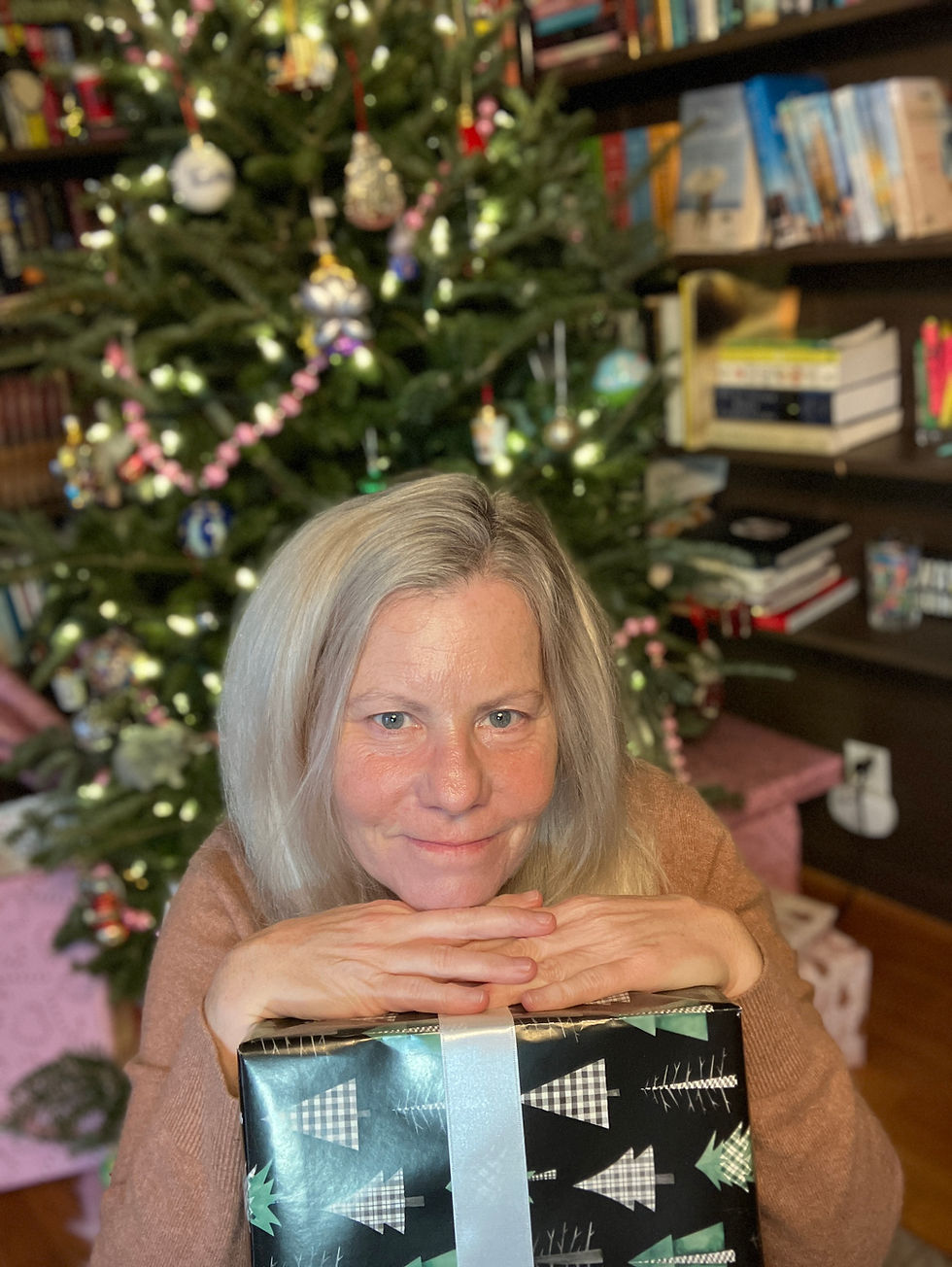
During the holidays, I've developed another little habit. Before I leave the house, I turn on my Christmas tree lights and put on holiday music. That way, when my Uber drops me off,
I'm not walking into a dark, silent house. There's something cheerful waiting to greet me.
It doesn't make me miss Eric any less. But it makes coming home a little easier.
Maybe there's something you can do to make an invitation feel less intimidating, too. You might ask a friend to meet you at the door when you arrive so you don't have to walk in alone. You might arrange a ride, decide ahead of time that you'll stay only a little while, or have something comforting waiting for you at home.
These aren't enormous changes. They're little ways to give yourself a chance to enjoy life while acknowledging that some parts of it are still hard.
How to Decline Holiday Invitations After Losing Your Husband
Holidays can make decisions about invitations especially complicated.
Maybe you've always spent Thanksgiving with another family or your inlaws, but this year the thought of sitting at their table without your husband feels unbearable.
Perhaps you don't want to attend the annual Christmas party where everyone arrives as a couple. Or maybe you're ready to create an entirely new tradition.
You can decline an invitation without rejecting the people who extended it.
You can say, "Thank you for including us, but we're doing something different this year."
You can also accept an invitation with the understanding that you might leave early. And if you're invited somewhere that feels welcoming but you're nervous about attending alone, I hope you'll consider giving yourself those first 15 minutes.
The holidays will never be exactly what they were when your husband was alive. But that doesn't mean every new experience has to be a painful one.
Some new traditions may turn out to be surprisingly wonderful. I know because I've experienced that myself.
For more encouragement about navigating traditions, expectations, and difficult days, you might also enjoy Grief and the Holidays: How to Survive the Holidays as a Widow When You're Already Dreading Them.
You Can Honor Your Grief and Still Say Yes to Life
One of the things I've learned since Eric died is that grief and joy don't have to take turns.
I can miss my husband terribly and still have a wonderful evening with friends. I can wish Eric were beside me and still enjoy a new experience.
I can say no to an invitation that doesn't feel right and yes to something I've never tried before. And I can change my mind along the way.
So the next time an invitation arrives, I hope you'll give yourself a moment to consider it.
Are these people willing to meet you where you are? Is this something you might enjoy, even if getting there feels frightening? Could you give yourself permission to try it for just a few minutes?
And if the answer is no, can you make a different choice without feeling guilty?
You don't owe anyone a performance of being okay. But you also don't have to wait until you stop missing your husband to experience something wonderful.
Sometimes a new friendship, a good laugh, or an unexpected adventure is waiting on the other side of a door you're afraid to walk through.
And sometimes, it's worth opening it.
Read More from The Widow's Comeback
When invitations stop coming and friendships begin to change, the loneliness can be especially painful.
If you're considering trying something new but aren't sure you're ready, this reflection worksheet can help you think about one small step.
Practical ideas for navigating difficult dates, changing traditions, and deciding what you want the holidays to look like this year.
A Little More Help for the Holidays
Holiday gatherings can bring difficult decisions, especially when you're trying to honor your grief while figuring out what feels right for you.
I created Six Holiday Exit Strategies, a free resource to help widows navigate holiday situations with greater confidence and a little less pressure.
You can receive it when you subscribe to The Widow's Comeback newsletter, where I share encouragement, practical resources, and reflections for widows learning to live again.
About the Author
Lisa Woolery is the founder of The Widow's Comeback, a ministry dedicated to encouraging women as they navigate grief, rediscover their identities, and rebuild their lives after the death of their husbands.
Widowed in 2019 after the death of her husband, Eric, Lisa writes from firsthand experience about the challenges and unexpected possibilities of widowhood. She is the award-winning author of The Widow's Comeback and the creator of grief resources designed to offer widows practical support, encouragement, and hope.
Through her books, articles, and online community, Lisa reminds widows that they can honor the love they've lost while discovering what life still holds.